
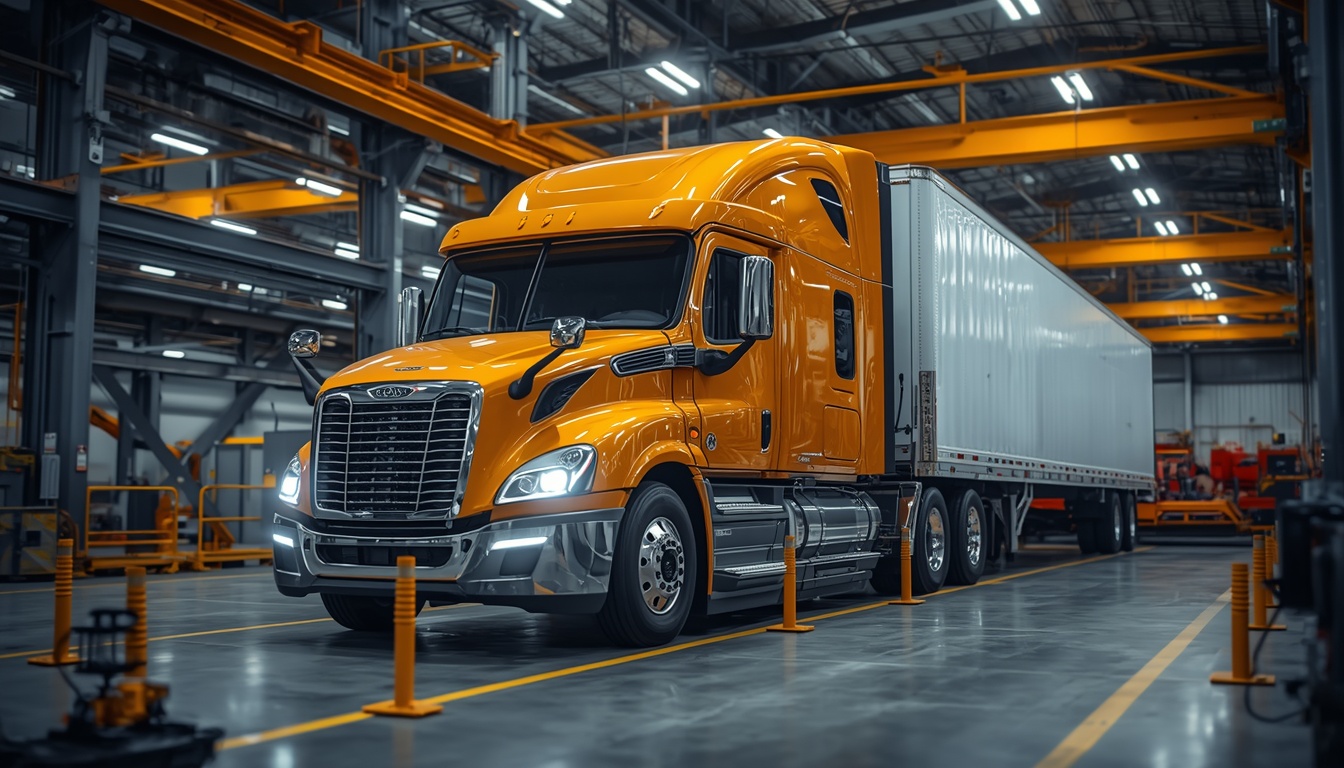
Listen up, engineers who secretly enjoy solving problems that smell faintly of diesel and progress. The freight world just got a jolt (pun intended). Electric heavy trucks and trailers are no longer sci‑fi prototypes; they’re real, complicated machines that need talent. Lots of it. If your recruiting playbook still revolves around “mechanical engineer + CAD + good attitude,” it’s time for an upgrade.
Why this market is a staffing goldmine (and a glorious headache)
Complexity = more roles: Batteries, power electronics, thermal systems, electric drivetrains, high‑power charging, vehicle software, telematics, and trailer electrification (hello, refrigerated trailers with batteries) — that’s a buffet of specialties.
Each subsystem needs engineers who can either deep-dive or actually play nice across disciplines.
Hardware meets software: These trucks are more like rolling data centers with 80,000 lbs of cargo.
Firmware, functional safety (ISO 26262-ish), over-the-air updates, and fleet management platforms all need engineers who can think in hardware-software hybrids.
Manufacturing scale-up drama: Prototypes are cute. Making thousands? Not cute. Process engineers, automation specialists, supply-chain problem solvers, and quality folks who can stand up to suppliers and still be human are in insanely high demand.
New standards and regulations:
Compliance engineers and test engineers who read standards for fun (you exist, we know you) are gold. Emissions may be down, but paperwork and validation tests are not.
Roles you should be hunting for yesterday
Battery systems engineers: cell selection, pack architecture, thermal management, BMS tuning. Bonus if they understand crashworthiness and battery recycling pathways.
Power electronics and motor engineers: converters, inverters, traction motors, and control strategies for mountain-grade torque.
Charging and infrastructure engineers: megawatt charging, grid integration, depot power design, and utility negotiations.
Systems and controls engineers: vehicle dynamics, regen strategies, and cross-disciplinary integration.
Manufacturing/process engineers & automation leads: think line layout, weld cell design, and swapping out a robot the size of a small car without melting down production.
Software/embedded engineers: safety-critical code, CAN/LVDS, cybersecurity for vehicles, and cloud‑to‑vehicle ops.
Test, validation & certification engineers: thermal, EMC, vibration, and regulatory testing — with a spreadsheet fetish.
Supply chain / sourcing experts: battery raw materials, semiconductors, and suppliers who can actually deliver.
How to recruit for the weird and wonderful
Sell the mission, not just the job: Engineers respond to challenging problems.
Lead with real engineering challenges: “Design a 300 kWh pack that loses <5% capacity over 8 years” beats “you’ll work on EV batteries.”
Use detailed technical takeaways in your postings: list tools, simulation packages, failure modes they’ll handle, and real test rigs they’ll touch. If a posting could double as a whitepaper abstract, you’re on the right track.
Prioritize cross-discipline experience: The best hires won’t be siloed. Look for people who can sketch a thermal loop one minute and argue state‑machine logic the next.
Embrace targeted sourcing: university microgrids, power electronics meetups, battery research groups, truck OEM ex‑employees, and even motorsport engineers who love torque density.
Offer career ladders that aren’t vague: senior roles in systems integration, lead roles for manufacturing scale-up, and clear paths into product/technical leadership.
Pay for scarcity (and speed): salaries, sign‑on, and realistic timeframes beat endless slow-hire processes. If they’re fielding multiple offers, your “we’ll get back to you in 3 weeks” is a dealbreaker.
Retention — because hiring once isn’t enough
Give engineers autonomy and a problem backlog that matters: let them own modules, own metrics, and see their changes in vehicles on the road.
Invest in labs and tooling: working with junked test rigs isn’t inspiring. Good equipment = happier engineers = fewer resumes to read.
Cross-train and rotate: a battery engineer who spends time on manufacturing lines becomes indispensable.
Recognize successes technically: engineer-focused awards, patent opportunities, and conference support are more motivating than ping-pong tournaments.
Quick checklist for staffing teams
- Map required skills to product roadmap phases (prototype vs. low-rate vs. mass production).
- Build talent pipelines from adjacent industries (aerospace, defense, motorsport).
- Partner with universities/research labs for early access to grads and interns.
- Standardize technical interview rigs: practical design tasks, fault‑finding scenarios, and hands‑on validation tests.
- Budget for long hiring cycles and sign-on offers for key hires.
- Wrap-up (short and punchy)
- Electric heavy trucks and trailers are a systems puzzle wrapped in a manufacturing marathon. For staffing and recruiting teams, that means a feast of roles, a need for smarter sourcing, and retention programs that actually respect engineers’ desire to solve gnarly problems. Hire the curious, the cross-disciplinary, and the slightly obsessed — they’ll be the ones who take these beasts from prototype to profitable production.