
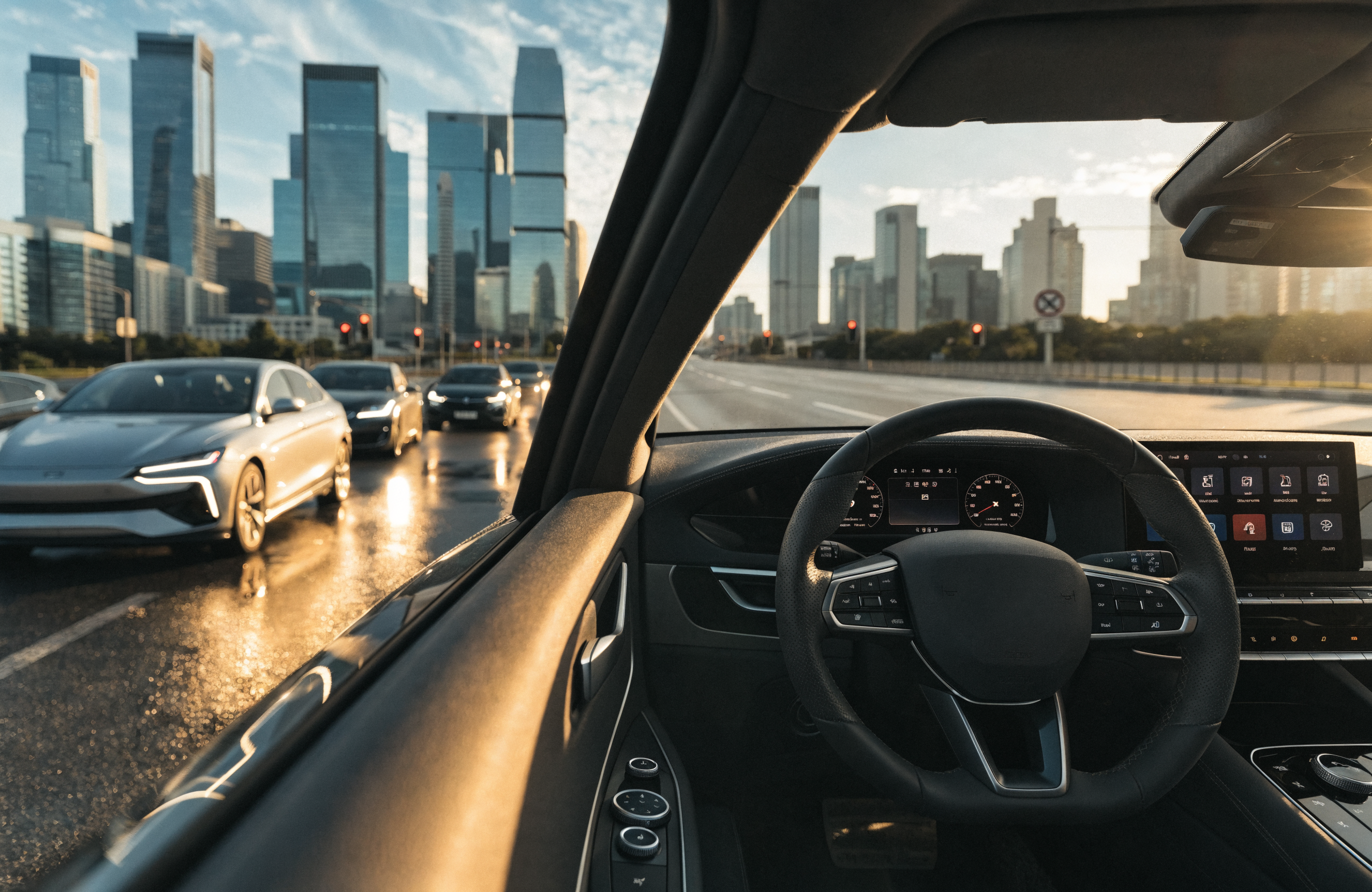
Remember when cars were basically metal boxes with radios and a mysterious “check engine” light that only mechanics could interpret? Welcome to smart mobility—where your car judges your playlist, argues with traffic lights, and threatens to update itself at 3 a.m. while you’re asleep. The automotive world is midlife-crisis-level transformative: electrified, connected, autonomous, and shamelessly eager to sell you subscriptions for features you used to get for free.
Connectivity: Because Your Car Needs More Friends Than You Do
Today’s cars are less vehicle, more networked gossip hub. V2X (vehicle-to-everything) means your car chats with other cars, traffic lights, and probably your refrigerator if it gets bored. That real-time data sharing promises fewer fender-benders and less time idling in traffic—assuming every piece of infrastructure isn’t still crying in analogue. OTA updates mean your car can get new tricks overnight, including one that inexplicably turns off your heated seats the second you’ve already paid for them. Progress!
Electrification: Quiet, Clean, and Occasionally Range-Anxious
Electric vehicles went from “quirky science project” to “mainstream flex” faster than you can say ‘battery degradation.’ Batteries are cheaper, ranges are longer, and charging stations are multiplying—slowly, like a sleepy urban raccoon. Smart charging and V2G tech let EVs play the role of neighborhood power bank, which sounds noble until your car refuses to charge because the grid is “feeling peaky today.” Fleets are electrifying too: ride-hailing and delivery companies are switching to EVs because emissions reduction is trendy and cheaper in the long run—assuming lithium prices cooperate.
Autonomy: Not Quite Jetsons, But We’re Trying
Full robot chauffeurs? Not yet. But we do have highway autopilots that let you nap through traffic jams (please don’t) and automated parking that saves face in tight garages. Level 5 autonomy—when cars drive everywhere without human oversight—still sits in the dream folder behind flying cars and universal Wi-Fi. Meanwhile, partial autonomy is useful: it steers, brakes, and occasionally panics spectacularly when confronted with a rogue shopping cart.
Shared Mobility: More Efficient, Less Personal Space
Why own a car when you can pay per ride and argue with a driverless van about the best podcast? Shared mobility—think car-sharing, ride-hailing, scooters that mysteriously end up in fountains—reduces congestion if people actually use it instead of treating it like a second closet. MaaS platforms promise one-tap planning for your whole trip, assuming you like handing your data to ten companies at once. Integration is great until someone inevitably forgets to update the app and your trip turns into an unplanned scavenger hunt.
The Sexy Tech Stuff (AI, Lidar, 5G — the Alphabet Soup)
AI runs the show: it tells the car what it sees, what to do, and how to guilt-trip you into better driving habits. Lidar and radar give vehicles eyes sharper than most humans on a Monday morning. 5G and edge computing make real-time decisions possible—because latency is the enemy of a polite lane change. Blockchain shows up occasionally to promise secure transactions and then vanishes like it’s embarrassed. Digital twins let engineers test everything in simulation so when real life throws a banana peel at your self-driving prototype, it at least did the stretch in virtual training.
Business Models: Subscriptions, Data, and the New Car Smell Tax
Automakers aren’t just selling cars anymore; they want recurring revenue. Subscriptions unlock features, update maps, and sometimes lock things behind a paywall you didn’t know existed. Insurance uses your driving data to decide if you’re a cautious citizen or a weekend stunt driver. Cities, telecoms, and energy companies all want a piece of the pie. The pie keeps shrinking as more stakeholders put in claims—and someone still has to manage the curbs.
Reality Check: Problems That Don’t Care About Hype
Infrastructure: Charging stations and smart roads need to exist in the real world, not just on investor decks. Privacy: Your car collects more data than your diary, and breaches are as charming as spilled coffee on leather. Regulations: Lawmakers are catching up at the pace of a sloth on espresso. Equity: Smart mobility shouldn’t mean “smart for those who can afford it.” Sustainability: EVs are cleaner on the road, but batteries are messy if we ignore raw materials and recycling.
What’s Next (Short Version Because You’re Busy)
Expect more EVs, more software updates at 3 a.m., and incremental autonomy features that make life easier—if they don’t also make you paranoid. Cities will pilot driverless shuttles so officials can check a box labeled “innovation” and sleep for a week. The real revolution is integration: when journeys are seamless, cheap, and slightly less infuriating.
Bottom line: smart mobility is making transportation smarter, more sustainable, and slightly more passive-aggressive.
The roads ahead are messy, hilarious, and full of potential—so buckle up, charge your battery, and try not to get into an existential debate with your dashboard.